
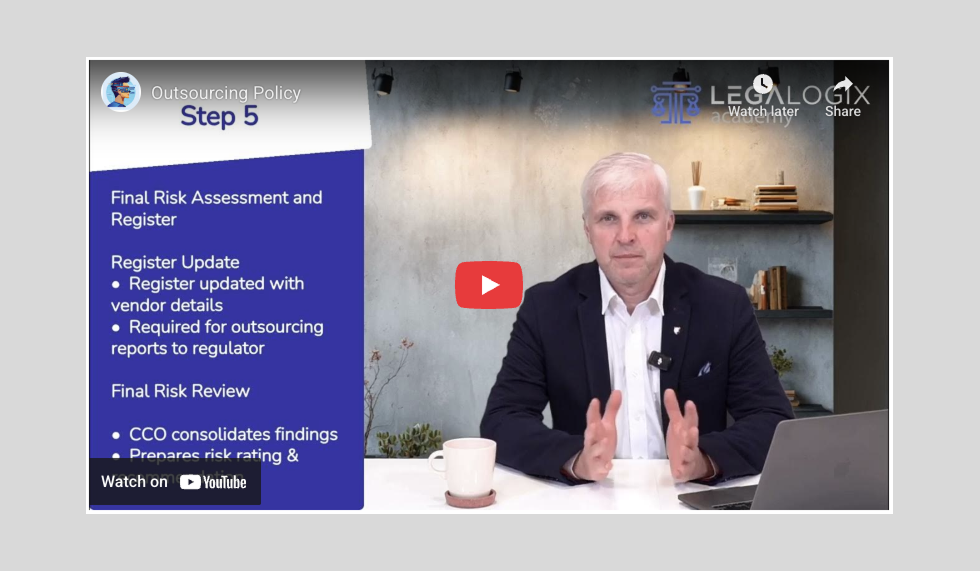
This training video explains how outsourcing must be treated as a structured, risk-based, and regulated process, not as a purely commercial decision. It introduces the company’s Outsourcing Policy and shows how third-party relationships are assessed, approved, documented, and monitored in line with regulatory and governance expectations.
The video highlights why outsourcing matters. External providers can directly affect operational resilience, data protection, regulatory compliance, and reputational risk. It explains how outsourced services are classified as critical, important, or non-critical, and why this classification drives everything that follows: the scope of due diligence, contractual requirements, regulatory notifications, and the intensity of ongoing monitoring.
Viewers are taken through the full outsourcing lifecycle step by step, from identifying the need for a vendor and collecting offers, to due diligence, risk assessment, board approval, contracting, and annual review. The responsibilities of all key roles are clearly defined, including the Process Owner, Chief Compliance Officer, CISO or CTO, MLRO, CEO, and the Board of Directors.
Particular focus is placed on due diligence and risk assessment, combining business, technical, and AML perspectives into a single, documented decision process. The importance of maintaining an up-to-date Outsourcing Register and having clear exit strategies for critical providers is also emphasized.
The core message is unambiguous: outsourcing does not transfer responsibility. Accountability remains with the company, senior management, and the board. Every outsourcing decision must be justified, controlled, documented, and continuously monitored.
Join Legalogix Academy and equip your compliance team with clear, practical, and regulator-ready training designed for real-world financial institutions.